Planting for the Planet: How Strategic Botanical Design Supports Corporate Net-Zero Commitments
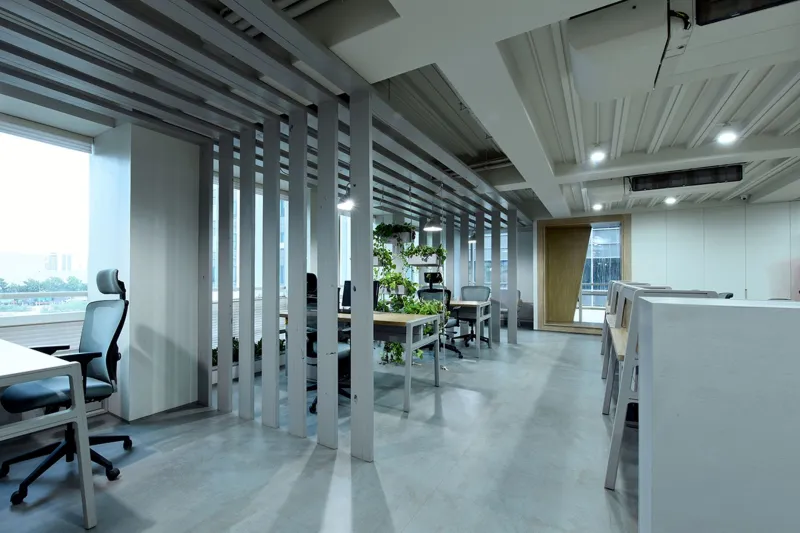
The pressure on American corporations to demonstrate genuine environmental progress has never been greater. Shareholders, regulators, and prospective employees alike scrutinize ESG disclosures with increasing sophistication. Against this backdrop, facility leaders are searching for interventions that are both credible and practical. Strategic botanical design—the deliberate, science-informed placement of living plant systems within commercial environments—offers precisely that combination. Far from a decorative gesture, a well-executed interior plant program contributes measurable carbon sequestration, reduces energy consumption, and provides defensible data points for sustainability reporting.
Understanding What Plants Actually Do for Carbon
Photosynthesis is the foundational mechanism here, and it is worth stating plainly: plants absorb carbon dioxide, fix carbon within their biomass, and release oxygen as a byproduct. In a commercial context, this process is continuous, passive, and scalable. The question is not whether plants sequester carbon—they do—but rather how much, and which species deliver the greatest environmental return per square foot of interior space.
Research from institutions including NASA and the University of Georgia has produced species-level data on CO₂ absorption rates that facility leaders can use to make informed procurement decisions. Among the most productive indoor species by absorption rate are the following:
- Pothos (Epipremnum aureum): Absorbs approximately 17.10 micromoles of CO₂ per square meter per second under standard indoor light conditions. Hardy, low-maintenance, and well-suited to the variable light environments common in open-plan American offices.
- Peace Lily (Spathiphyllum wallisii): Among the highest-performing species for combined CO₂ absorption and volatile organic compound (VOC) removal, making it a dual-purpose asset in spaces with new furnishings or synthetic carpeting.
- Rubber Plant (Ficus elastica): A larger-format specimen with substantial leaf surface area, translating to proportionally higher carbon uptake. Particularly effective when deployed in clusters near high-traffic zones.
- Spider Plant (Chlorophytum comosum): Exceptionally efficient per unit of care investment, with strong CO₂ absorption and a demonstrated capacity to reproduce rapidly, enabling cost-effective program expansion.
- Boston Fern (Nephrolepis exaltata): Performs best in humid environments such as reception areas with water features or kitchenettes, where its dense frond structure maximizes surface area for gas exchange.
A single mature rubber plant in optimal conditions can absorb between 10 and 20 pounds of CO₂ annually. While that figure may appear modest in isolation, a thoughtfully designed installation of 200 specimens across a mid-sized corporate campus begins to represent a quantifiable offset contribution—one that can be documented, tracked, and reported.
From Decoration to Data: Building a Botanical Carbon Inventory
The gap between having plants in an office and leveraging those plants as sustainability assets lies almost entirely in documentation. Companies that treat their botanical installations as managed environmental systems—rather than aesthetic amenities—can incorporate plant carbon sequestration into internal sustainability accounting frameworks.
Building a botanical carbon inventory requires three components. First, a complete species and quantity census, updated seasonally to reflect plant additions, removals, and health status changes. Second, species-level absorption coefficients drawn from peer-reviewed horticultural literature, applied to each plant category within the installation. Third, a standardized calculation methodology that converts raw absorption estimates into CO₂-equivalent figures compatible with the Greenhouse Gas Protocol or equivalent reporting frameworks used by the organization.
This is not a trivial undertaking, and it is not one that most facilities teams should attempt without expert guidance. However, when executed correctly, the resulting data provides a credible, auditable contribution to scope-reduction narratives—particularly valuable for companies pursuing Science Based Targets initiative (SBTi) alignment or preparing for voluntary carbon disclosure.
The Indirect Carbon Benefits That Calculations Often Miss
Direct CO₂ sequestration is only part of the environmental story. Botanical installations deliver several indirect carbon-reduction benefits that, in aggregate, often exceed the sequestration contribution itself.
Thermal regulation: Dense plantings near exterior windows and sun-exposed walls reduce solar heat gain, decreasing the load on HVAC systems. Studies suggest that strategically positioned greenery can reduce cooling energy demand by 10 to 15 percent in affected zones, translating directly into lower utility-related carbon emissions.
Humidity management: Interior plants release water vapor through transpiration, naturally raising humidity in dry office environments. This reduces reliance on energy-intensive humidification systems common in northern US climates during winter months.
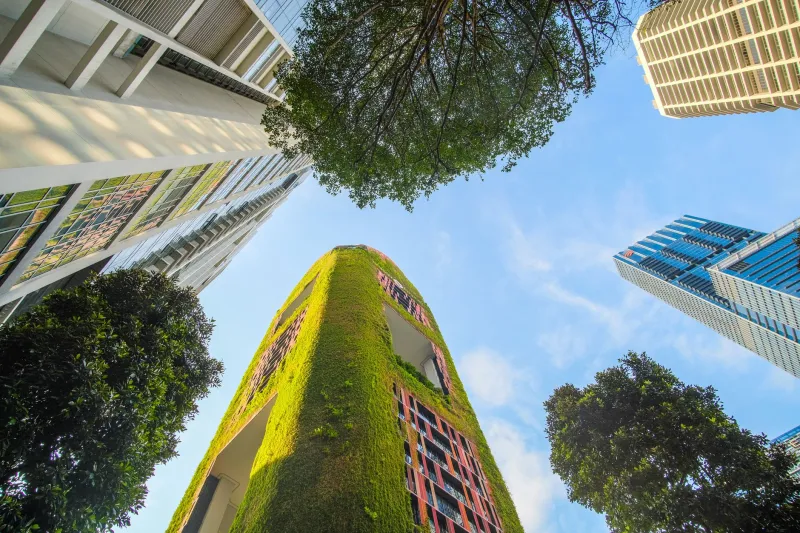
Material displacement: Living walls and botanical partitions can replace manufactured acoustic panels, decorative cladding, and synthetic room dividers—materials with embedded carbon costs from manufacturing and transportation. Choosing a moss wall over a vinyl partition is, in a meaningful sense, a carbon-reduction decision.
Aligning Species Selection with ESG Reporting Periods
Corporate ESG calendars follow a predictable annual rhythm, and botanical programs should be designed with that rhythm in mind. Spring installations—timed to coincide with peak growing season—maximize the photosynthetic output recorded within a fiscal year. Quarterly plant health audits, conducted by qualified horticulturalists, ensure that the carbon-contributing capacity of the installation is maintained rather than allowed to degrade through neglect.
Species selection should also account for longevity. A plant that thrives for five years in a given environment contributes five years of sequestration data. A species poorly matched to its conditions may decline within eighteen months, creating a gap in the carbon record and requiring replacement procurement with its associated supply-chain footprint.
The Reporting Opportunity
For organizations publishing annual sustainability reports, a documented botanical carbon program represents a distinctive and visually compelling section—one that resonates with a broad audience precisely because it is tangible and relatable in ways that energy efficiency metrics often are not. Photographs of thriving green walls, paired with clearly stated absorption figures and species inventories, communicate environmental commitment in human terms.
More substantively, as voluntary carbon markets mature and corporate disclosure requirements tighten, organizations that have already built the infrastructure for botanical carbon accounting will be better positioned to integrate those figures into more formal reporting structures.
The office that was once simply a place of work is increasingly expected to carry environmental responsibilities. Strategic botanical design is one of the few interventions that meets that expectation with beauty, scientific credibility, and measurable results.