Cultivating From Within: The Business Case for Building an Internal Plant Stewardship Program

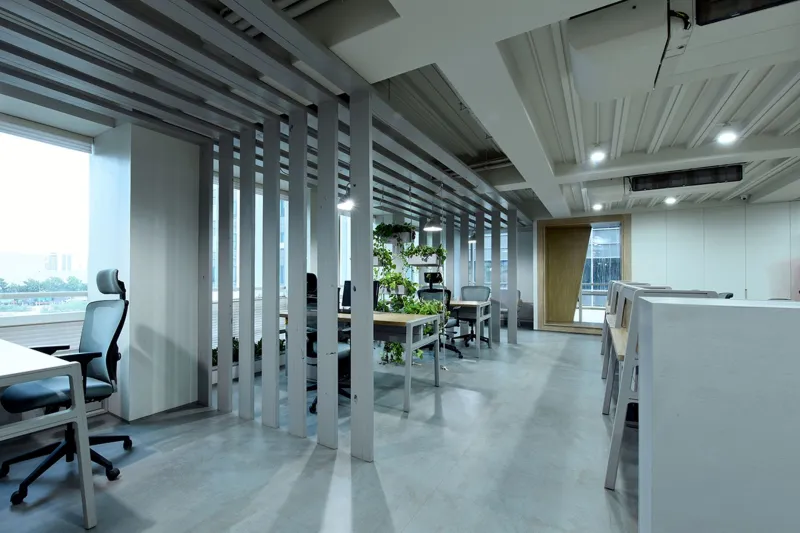
The pattern is familiar to anyone who has managed facilities for more than a few years. A newly designed office opens with a striking botanical installation—lush, carefully curated, and clearly the product of professional expertise. Twelve months later, half the specimens are yellowing. The moss wall has dried out. A once-magnificent fiddle-leaf fig is dropping leaves at a rate that suggests terminal distress. The external maintenance contractor visits monthly, but the interval between visits is long enough for irreversible damage to accumulate.
This is not a maintenance contractor problem, precisely. It is a structural problem. Monthly service visits cannot substitute for the attentive, frequent observation that healthy plants require. The solution, for many organizations, is not to find a better contractor—it is to develop the internal capacity to care for botanical systems as a genuine organizational competency.
An internal plant stewardship program is not a cost-cutting measure dressed in green language. It is a strategic investment in institutional knowledge, employee engagement, and the long-term protection of a physical asset. When designed correctly, it also delivers benefits that extend well beyond the health of the plants themselves.
Why Outsourced Models Fail at Scale
External botanical maintenance contracts are the default choice for most American businesses, and they serve a legitimate purpose—particularly for organizations without the staff bandwidth or physical footprint to justify internal expertise. However, the limitations of the outsourced model become more pronounced as botanical installations grow in complexity and scale.
The fundamental constraint is visit frequency. A maintenance technician visiting once per month cannot detect the early signs of root rot, pest infestation, or light deficiency that an observant daily presence would catch. By the time the professional arrives, the problem has frequently progressed beyond easy remediation. Specimen loss follows, and with it, the gradual visual and environmental degradation of the installation.
There is also the matter of institutional knowledge transfer. An external contractor knows your plants. Your employees do not. When the contractor relationship ends—as all contracts eventually do—the organization is left with a botanical system it does not understand and cannot manage. Starting over with a new provider means starting the knowledge-building process from scratch, often with specimens already stressed by the transition period.
Finally, there is the engagement dimension. Employees who work alongside thriving plants and feel no connection to their care are experiencing the botanical environment as a backdrop rather than a living system. The psychological benefits of biophilic design are real, but they are amplified when people feel a sense of relationship with the natural elements in their environment.
Designing the Stewardship Framework
A successful internal plant stewardship program requires deliberate architecture. The following framework reflects the components that reliably distinguish programs that endure from those that dissolve within a season.
Define the Stewardship Role Clearly
The most common failure mode for internal programs is role ambiguity. Plant care becomes everyone's responsibility in theory and no one's responsibility in practice. Effective programs assign specific stewardship responsibilities to named individuals, with clearly defined tasks, geographic zones within the facility, and time allocations.
Stewardship roles should be voluntary or incentivized rather than mandated. Employees who choose to participate bring genuine interest to the work, which translates into attentiveness. A small stipend, additional PTO, or recognition within company culture programs are all viable incentive structures, depending on organizational norms.
Invest in Foundational Training
Stewards need competence, not just enthusiasm. A foundational training curriculum—ideally delivered by a qualified horticulturalist—should cover the following at minimum:
- Species identification: Stewards should know what they are caring for. Different species have radically different water, light, and humidity requirements, and a uniform care approach applied across a diverse installation is a reliable path to specimen loss.
- Watering discipline: Overwatering kills more indoor plants in commercial environments than any other single cause. Training should address the mechanics of moisture assessment—using moisture meters, finger-testing soil, and reading species-specific visual cues—rather than relying on fixed schedules.
- Light management: Stewards should understand the light requirements of each species in their zone and be empowered to flag situations where light conditions have changed due to furniture rearrangement, new window treatments, or seasonal shifts.
- Early problem recognition: The ability to identify the early signs of pest activity, fungal disease, nutrient deficiency, and root stress is arguably the most valuable skill a steward can develop. Early detection allows for intervention before damage becomes irreversible.
- Escalation protocols: Internal stewards should know when a problem exceeds their competence and have a clear pathway to engage professional support before the situation deteriorates further.
Build a Maintenance Calendar and Documentation System
Stewardship programs without documentation tend to drift. A shared maintenance calendar—tracking watering schedules, fertilization cycles, pruning events, and health observations by specimen or zone—creates accountability and provides a record that supports troubleshooting when problems arise.
Digital tools, including simple shared spreadsheets or dedicated facility management platforms, can support this documentation without creating significant administrative burden. The key is consistency: records updated in real time are useful; records reconstructed from memory are not.
Establish a Tiered Support Structure
Internal stewardship does not mean abandoning professional expertise entirely. The most effective programs operate on a tiered model: internal stewards handle daily and weekly care, while a qualified botanical partner provides quarterly deep assessments, seasonal species rotations, and professional intervention when health issues exceed internal capacity.
This structure reduces the cost of professional service contracts substantially—shifting from monthly maintenance visits to quarterly consultations—while ensuring that institutional knowledge is supplemented rather than replaced.
The Financial Arithmetic
The cost comparison between a full-service external maintenance contract and a well-designed internal program varies by organization size and installation complexity. However, the general pattern is consistent: organizations with 50 or more employees and botanical installations covering 2,000 or more square feet typically find that an internal program, once established, reduces ongoing botanical care costs by 30 to 50 percent relative to monthly external service contracts.
Those savings must be weighed against the upfront investment in training—typically a one-time cost of $500 to $2,000 depending on program scope—and the ongoing time allocation for stewards, which averages 30 to 60 minutes per week for a mid-sized installation zone.
The less quantifiable but equally real financial benefit is specimen preservation. Plants that receive attentive, frequent care last longer. Reducing the replacement rate of specimens—which can represent a significant recurring expense in neglected installations—compounds the cost advantage of the internal model over time.
Engagement and Retention: The Unexpected Dividend
Organizations that have implemented plant stewardship programs consistently report an outcome they did not fully anticipate: measurable improvements in employee engagement and, in some cases, retention. The reasons are not difficult to understand. Stewardship programs give employees a tangible, visible contribution to their workplace environment. They create cross-departmental relationships—stewards from different teams interact around shared care responsibilities—and they introduce a rhythm of care and observation that is qualitatively different from the abstract demands of knowledge work.
In an era when organizations are investing heavily in engagement initiatives with mixed results, a program that costs relatively little and produces both environmental and human benefits deserves serious consideration.
Starting Small and Building Deliberately
For organizations considering this path, the counsel from experienced botanical practitioners is consistent: begin with a pilot zone rather than attempting a facility-wide rollout. Select a manageable area, recruit two or three willing stewards, invest in proper training, and observe the program in operation for a full growing season before expanding.
The lessons learned in a pilot—about which species are easiest to maintain internally, which stewards are most effective, which documentation systems work in practice—will be invaluable in designing a program that scales successfully.
The goal, ultimately, is an organization that does not merely host plants but genuinely understands and tends to them. That distinction—between botanical decoration and botanical stewardship—is the difference between an installation that fades and one that grows.