When the Ficus Fades: Reading Plant Decline as a Signal of Organizational Distress

There is a quiet irony embedded in the modern American office: the same environments designed to attract and retain talented professionals are often the ones where living things struggle to survive. Walk through enough corporate lobbies, open-plan floors, and conference suites, and a pattern begins to emerge. Where engagement surveys score lowest, where turnover runs highest, the plants tend to look the worst.
This is not coincidence. It is, in the view of professional botanical consultants and organizational psychologists alike, a diagnostic signal worth taking seriously.
The Shared Ecology of Neglect
Plants and people share certain fundamental requirements: adequate light, consistent nourishment, a stable environment, and — perhaps most importantly — sustained attention. When organizational culture deteriorates, the first casualties are rarely the quarterly reports. They are the small, living things that depend on human care to survive.
Consider what happens inside a company experiencing elevated burnout. Maintenance routines become inconsistent. Employees disengage from communal spaces. Facilities staff are stretched thin or overlooked. The result is a built environment that gradually loses its vitality — and the plants, entirely dependent on that environment, reflect the change with remarkable accuracy.
At Agency Botanics, we have observed this dynamic across sectors ranging from financial services firms in Chicago to technology campuses along the I-95 corridor. In nearly every instance, a botanical audit conducted alongside an organizational health review revealed striking parallels: the same departments where absenteeism had spiked were the ones where the Pothos had gone yellow and the peace lilies had collapsed.
Case Study: A Midwest Insurance Firm Finds Its Leading Indicator
In 2022, a regional insurance provider in Columbus, Ohio engaged Agency Botanics following a significant uptick in voluntary turnover. Leadership had already commissioned an engagement survey, the results of which were predictably discouraging. What they had not anticipated was that our initial walkthrough would corroborate those findings almost room by room.
The underwriting floor — where turnover was most acute — housed twelve planters. Ten were in visible decline. The executive suite, by contrast, where a dedicated facilities coordinator attended to a curated selection of low-maintenance specimens, was immaculate.
The disparity was instructive. It pointed not to a lack of interest in greenery, but to a systemic breakdown in care infrastructure — the same breakdown that was quietly eroding employee morale.
Over the following six months, Agency Botanics implemented a structured botanical revitalization program in tandem with the firm's HR-led engagement initiative. New species suited to the floor's light conditions replaced the failing specimens. Care responsibilities were redistributed and formalized. Employees were invited — not mandated — to participate in maintenance rotations, a practice that organizational psychologists have linked to increased feelings of workplace ownership and belonging.
By the end of the fiscal year, voluntary turnover on the underwriting floor had declined by 18 percent. Exit interview data from that period cited improved workplace environment among the top three reasons employees chose to stay.
Botanical Health as a Leading Indicator
The business case for treating plant vitality as an organizational metric rests on a straightforward premise: living systems require sustained, intentional care. When that care is present, it signals something meaningful about the culture that produces it.
Facility managers and HR directors who work with Agency Botanics are increasingly incorporating botanical assessments into their broader workplace health reviews. A quarterly plant audit, conducted with the same rigor applied to HVAC inspections or ergonomic evaluations, can surface early indicators of environmental neglect before they manifest in engagement scores or attrition figures.
The metrics worth tracking include leaf health and color consistency, soil moisture regularity, pest incidence rates, and the frequency of species replacement. Deterioration across multiple indicators simultaneously — particularly in specific zones or departments — warrants deeper investigation.
Reversing the Decline: A Parallel Strategy
The most effective interventions address botanical and organizational health in concert rather than in sequence. Replacing struggling plants without addressing the cultural conditions that allowed them to fail produces temporary improvement at best. Conversely, culture initiatives that ignore the physical environment overlook a powerful lever for behavioral change.
A parallel strategy begins with an honest environmental assessment. Which spaces receive adequate natural light? Where are air circulation challenges most pronounced? Which departments have the fewest touchpoints with living greenery? These questions matter both horticulturally and organizationally.
From there, species selection should reflect realistic care capacity. A company in early-stage cultural recovery is not well served by high-maintenance specimens that demand expert attention. Hardy, forgiving varieties — ZZ plants, snake plants, cast-iron plants — provide visible vitality with minimal risk of failure during the transition period.
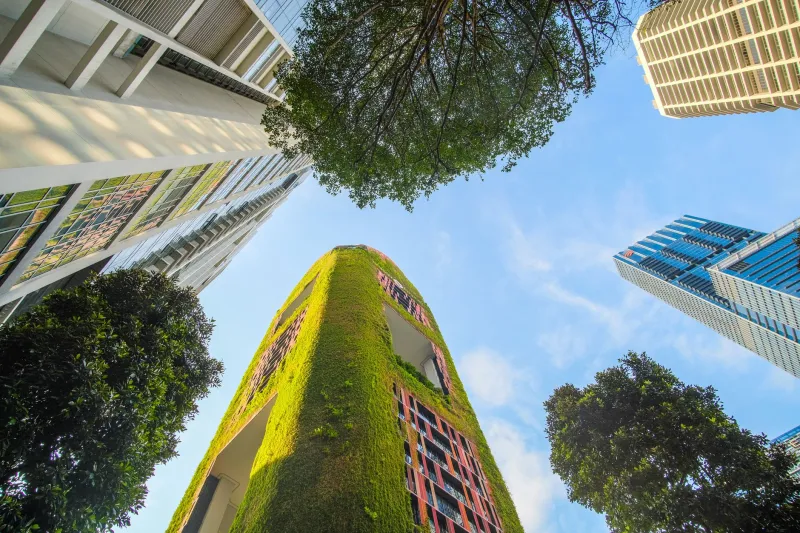
As care routines stabilize and engagement improves, more ambitious botanical installations become viable. Green walls, seasonal specimen rotations, and biophilic design features can then serve as visible markers of organizational progress — a living record of a workplace that chose to invest in its own renewal.
The Organizational Argument for Botanical Investment
Executives sometimes resist framing plant care as a strategic priority. The instinct is understandable: in a quarter driven by margin pressure, a wilting fern can seem like a low-order concern.
The evidence, however, suggests otherwise. Research published by the American Psychological Association and supported by decades of environmental psychology literature consistently demonstrates that living greenery in the workplace reduces stress, improves cognitive performance, and increases self-reported job satisfaction. When plants are thriving, they are doing measurable work on behalf of the organization.
When they are not, they are doing something else entirely: broadcasting, to every employee who passes them, that this is an environment where living things are not tended with care.
That message lands. And it compounds over time.
At Agency Botanics, we believe that the decision to invest seriously in workplace botanical health is, at its core, a decision about what kind of organization you intend to be. The plants will tell you where you currently stand. The question is whether you are prepared to listen.