Rooted in Memory: How to Turn Heirloom Plants Into a Living Family Legacy

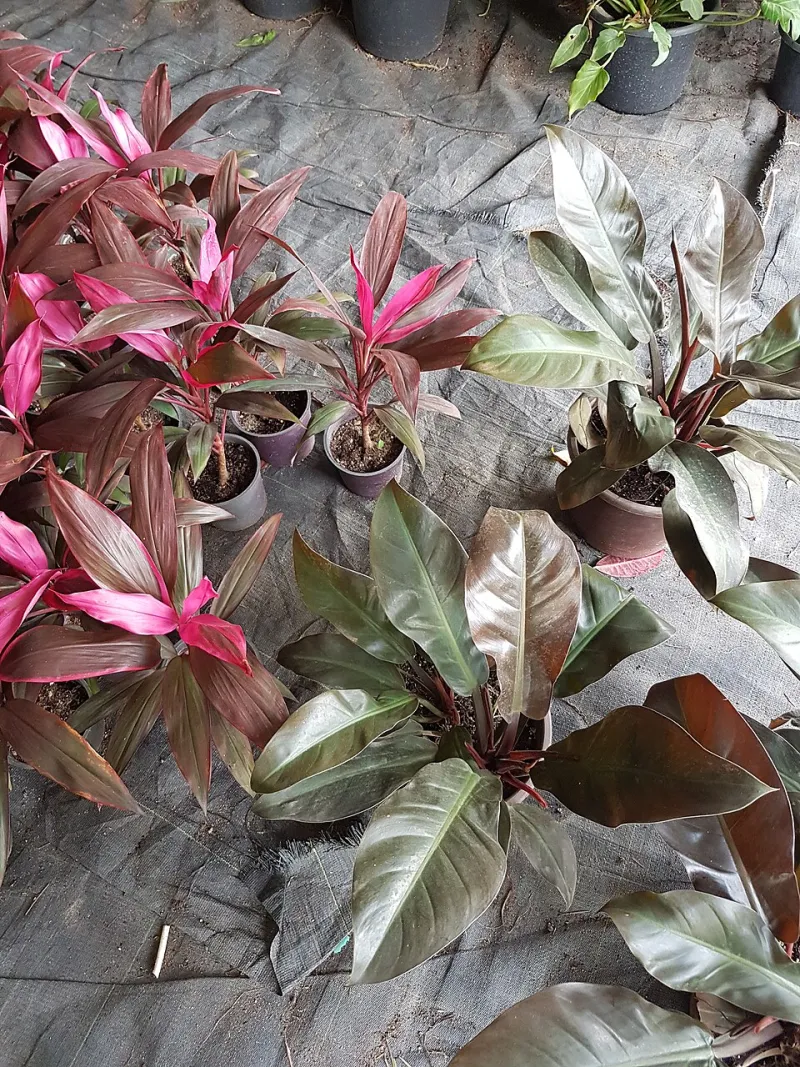
Photo: Ferdinand Reus, CC BY-SA 2.0, via Wikimedia Commons
There is a particular kind of object that carries weight beyond its material form. A quilt stitched by a great-grandmother. A cast-iron skillet seasoned over decades. A wooden rocking chair worn smooth at the armrests. These things tell stories. Yet among the most quietly powerful of all heirlooms is one that most people overlook entirely—a living plant, passed from one set of hands to another across years, sometimes across generations.
For many American families, a grandmother's African violet sits on a bathroom shelf not because it matches the tile, but because it arrived in a paper cup from someone who is no longer here. A cutting snipped from a childhood backyard rosebush before a family moved across the country. A Christmas cactus that has bloomed faithfully every December since before anyone can quite remember. These plants are not decorations. They are documents.
At Agency Botanics, we work with residential clients who are increasingly interested in designing homes that reflect personal narrative—not just aesthetic preference. The heirloom plant conversation has emerged as one of the most emotionally resonant dimensions of that work. What follows is a practical and philosophical framework for honoring botanical heritage while building something new.
Why Plants Make Exceptional Heirlooms
Unlike most inherited objects, plants are not static. They grow, adapt, and respond to care. They can be multiplied. A single African violet cutting taken from your grandmother's plant can, within a few years, become a dozen plants—some living in your home, others shared with cousins, neighbors, or friends. The original plant's lineage continues to expand outward, carried by living tissue rather than memory alone.
This capacity for propagation is what distinguishes botanical heirlooms from every other category of inherited object. A quilt cannot become two quilts. A plant, given the right conditions and a patient hand, absolutely can.
There is also something worth noting about the act of tending. Caring for a plant that belonged to someone you loved is a form of ongoing relationship. The daily ritual of watering, the seasonal adjustment of light, the occasional repotting—these are small but deliberate acts of continuity. Botanical design, at its most meaningful, is not merely about aesthetics. It is about the cultivation of connection.
Identifying the Plants Worth Preserving
Before propagation can begin, it is worth taking stock of what you have—or what you might retrieve. Consider reaching out to older relatives about plants they have kept for years. Ask specifically about origins. A plant that has been in the family for more than a decade likely has a story attached to it, even if that story has never been formally told.
Common heirloom candidates include:
- African violets (Saintpaulia), which are among the most frequently passed-down houseplants in the United States and propagate readily from leaf cuttings.
- Pothos and philodendrons, which root easily in water and have long histories as household staples across American homes.
- Jade plants (Crassula ovata), slow-growing succulents that can live for decades and propagate from both stem and leaf.
- Christmas and Thanksgiving cacti (Schlumbergera), which bloom seasonally and are frequently shared as holiday gifts across generations.
- Rosebushes and peonies, which, while requiring more space and outdoor conditions, carry enormous sentimental weight and can be propagated through cuttings or division.
- Heirloom herbs, including rosemary and lemon verbena, which have culinary and cultural histories in many family traditions.
If a plant from your family history has already been lost, it is worth asking whether anyone retained a cutting. In many cases, a plant that appears to be gone has quietly survived in someone else's home, unrecognized as the heirloom it is.
Propagation as Preservation
Once you have identified a plant worth preserving, the next step is to create redundancy. The most fragile point in a plant's heirloom life is the moment when it exists in only one location, cared for by only one person. Propagation resolves this vulnerability.
The method depends on the plant species, but several general approaches apply broadly:
Leaf cuttings work well for African violets, sedums, and many succulents. A single healthy leaf, placed stem-down in moist propagation medium, will typically produce a new plantlet within several weeks.
Stem cuttings are appropriate for pothos, philodendrons, rosemary, jade, and many other common houseplants. A cutting of three to five inches, taken just below a node, can be rooted in water or directly in a light propagation mix.
Division is the method of choice for plants that grow in clumps—ferns, snake plants, peace lilies, and certain ornamental grasses. Carefully separating the root mass at natural divisions and repotting each section preserves the original plant's genetic identity.
Air layering, while more technical, is useful for woody houseplants like ficus or dracaena, where stem cuttings are less reliable.
For clients interested in a more structured approach, Agency Botanics offers propagation consultations as part of our residential design services. We can assess the health of existing heirloom specimens, recommend propagation methods suited to specific plants, and help clients develop a preservation plan that ensures the plant's lineage continues reliably.
Designing Around Heritage Specimens
Once propagated, heirloom plants deserve thoughtful placement. This is where botanical design intersects most directly with personal history. Rather than relegating a grandmother's violet to a forgotten corner, consider building a small vignette around it—a curated arrangement that acknowledges its significance while integrating it into the broader aesthetic of the room.
A dedicated shelf or windowsill grouping that brings together multiple generations of the same plant—the original alongside its propagated offspring—creates a visual narrative. Labeling plants with handwritten tags noting their origin adds another layer of meaning, particularly in homes with children who may not yet understand the story behind what they are looking at.
For families with outdoor space, incorporating heirloom specimens into a garden bed or container arrangement can extend the botanical legacy into a more public-facing space. A rosebush from a childhood home, replanted in a current garden, becomes a bridge between places as well as between people.
Building New Traditions Around Old Plants
One of the most compelling aspects of botanical heirloom culture is its capacity to generate new rituals. Families who begin intentionally propagating and sharing plants often find that the practice takes on a life of its own. A cutting exchanged at a holiday gathering. A propagated specimen given as a housewarming gift. A shared plant that grows simultaneously in homes separated by hundreds of miles.
These are not sentimental gestures alone. They are design decisions—choices about what a home should hold and what a family should carry forward. The botanical legacy is, in this sense, a living design document, one that grows more complex and more beautiful with each passing year.
At Agency Botanics, we believe that the most enduring residential spaces are those that reflect genuine personal history. Plants with lineage are among the most powerful tools available for achieving that depth. They ask very little in return—some light, some water, a measure of attention—and they offer something that no purchased specimen can replicate: the particular weight of having come from somewhere, and from someone.
If you are considering how to incorporate heirloom botanical elements into your home's design, we welcome the conversation. Every plant has a story. The question is simply whether you are ready to help it continue.